
Al-Kharabsheh: Jordan Is a Pioneer in Energy Transition and Advancing the Green Economy
Al-Taj News – Minister of Energy and Mineral Resources Saleh Al-Kharabsheh said Tuesday that Jordan has been and remains one of the leading countries in the energy transition and in increasing the contribution of renewable energy to electricity generation, stressing that advancing sustainability and the green transition are national priorities for achieving a more resilient and sustainable economy and enhancing energy security.
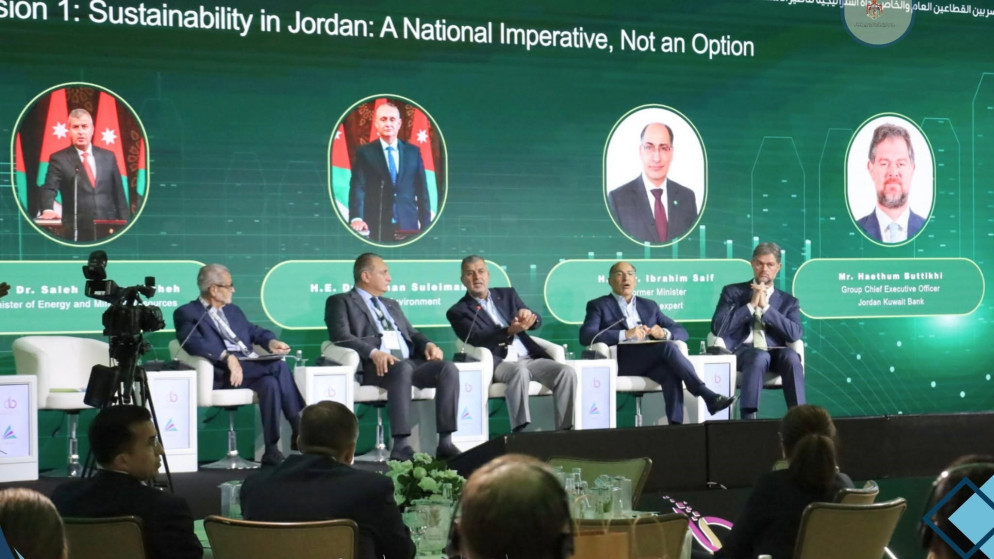
Al-Kharabsheh made the remarks during his participation in a session titled “Sustainability in Jordan: A National Necessity, Not an Option,” held as part of the Green Finance Forum 2026, organized by the Association of Banks in Jordan under the theme “Green Dialogue Between the Public and Private Sectors: A Strategic Tool for Framing Sustainability.”
Al-Kharabsheh said the green transition contributes to strengthening the resilience of the national economy, noting that the Economic Modernization Vision provides a strategic framework for supporting the transition and achieving sustainable development by developing economic sectors, improving their efficiency, and enhancing their ability to address future challenges.
He explained that the world is undergoing a gradual transition from fossil fuels toward the use of natural gas and expanding reliance on renewable energy, pointing out that green hydrogen represents the fuel of the future.
He noted that Jordan is among the leading countries in this field, explaining that the Kingdom has begun supplying natural gas from the Risha Gas Field to most cities and industrial clusters, in addition to signing a number of agreements and memoranda of understanding related to green hydrogen production.
In this context, Al-Kharabsheh stressed that the government has worked to amend a number of pieces of legislation supporting the energy transition, explaining that exemptions from taxes and fees for energy storage equipment were recently approved.
He added that the government is addressing energy issues within a comprehensive vision for economic sustainability, strengthening Jordan’s ability to cope with the repercussions of fluctuations in global market prices and their impact on supply chains, productive sectors, trade, and economic growth.
The first session, moderated by Edama Association Chairman Duraid Mahasneh and featuring, alongside Al-Kharabsheh, Minister of Environment Ayman Suleiman, former minister and energy expert Ibrahim Saif, and Jordan Kuwait Bank CEO Haitham Al-Bataikhi, discussed a number of issues related to sustainability as a national economic concern.
The session also addressed Jordan’s resilience in making a just transition toward renewable energy and energy efficiency, the importance of sustainability in reducing exposure to external shocks and lowering reliance on fossil fuels, as well as the role of the green transition in strengthening economic resilience.